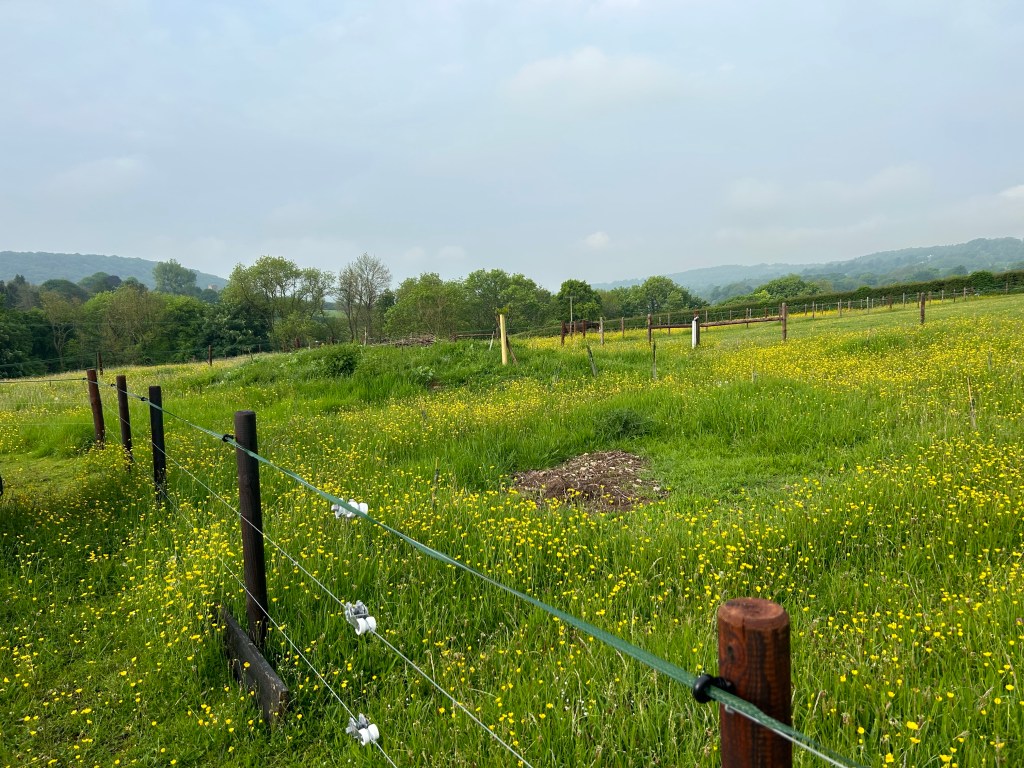
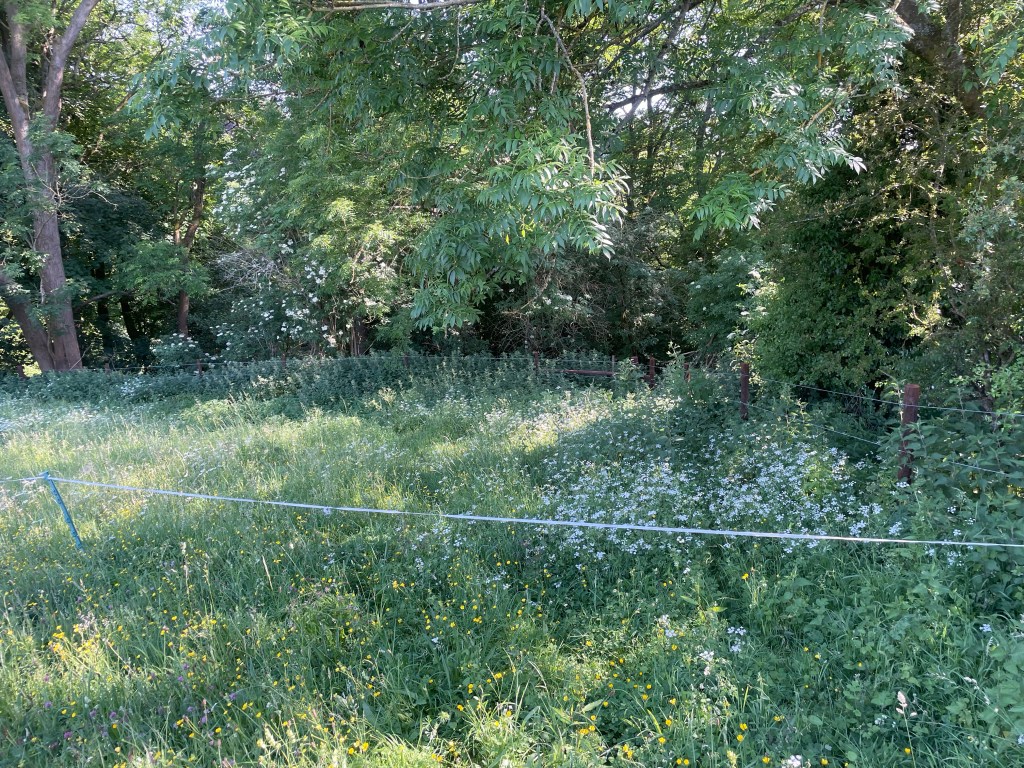
The field is bordered on two sides by mature woodland with very tall trees, but there is minimal edge habitat between this and the grassland, and it is in the edge habitat that birds and other wildlife thrive.
There is a long blackthorn hedge that is well loved by birds, but we want to create more habitat for birds, insects and other wildlife. The plan is to plant a few larger trees, mainly in the copse but also in other places where they will provide shade for the horses in the fields. At the moment the only shade they can get until late afternoon is inside the stables.
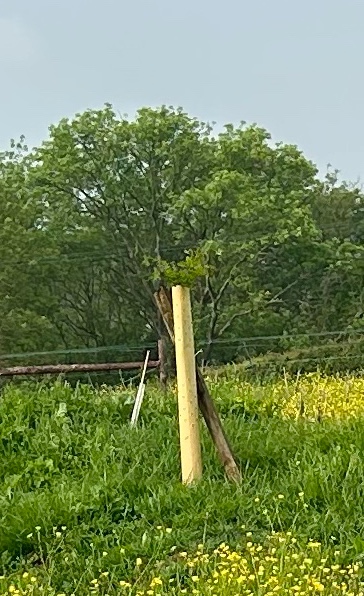
There was a gap in the hedge which used to be an old gateway, and here we planted a disease resistant elm.
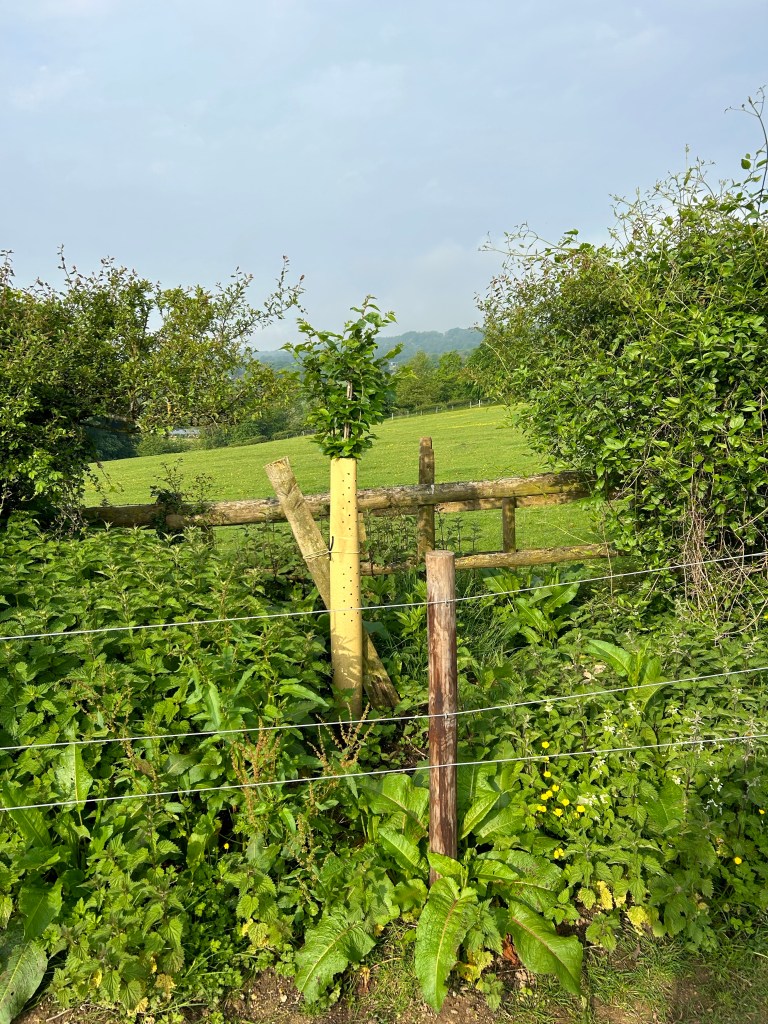
Unfortunately in June 2024 this one got nibbled by a long necked horse (Mira!) and had a little set back. It will be fine given a bit of time, a good job elms are vigorous growers! It now has extra horse proof protection.
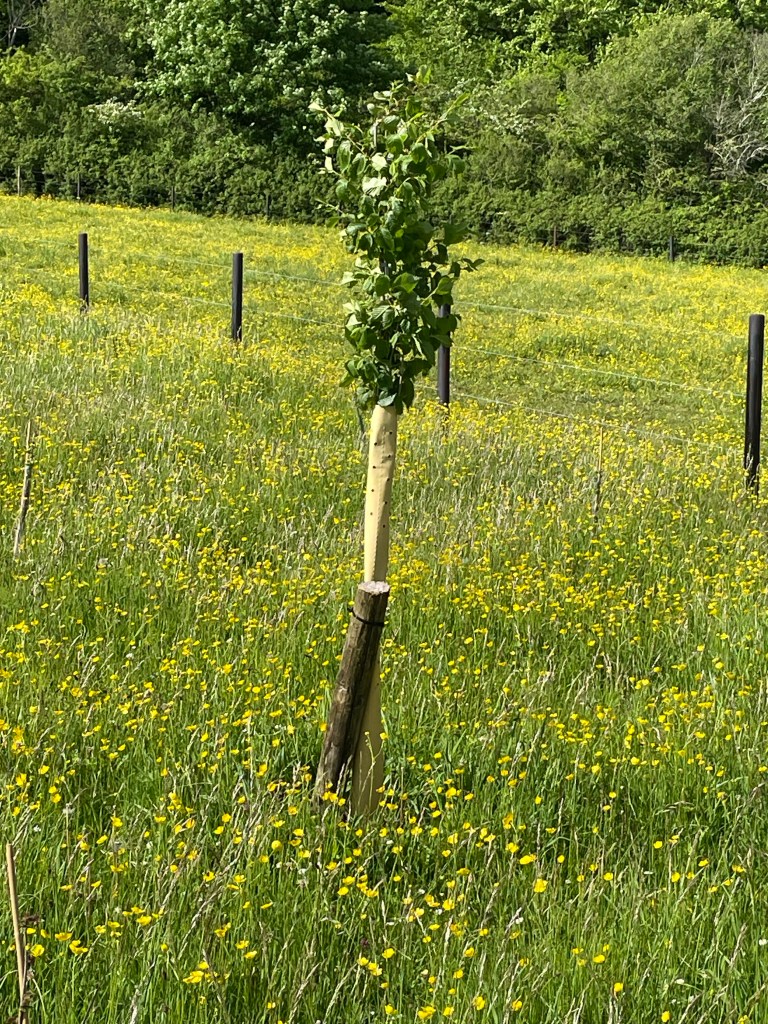
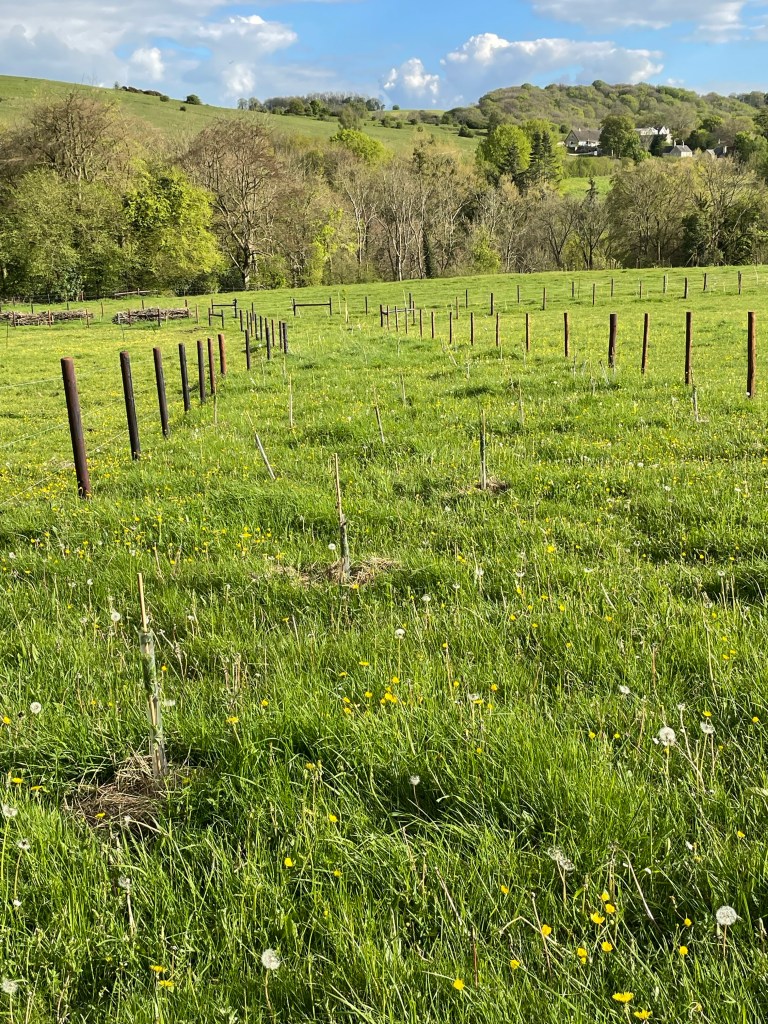
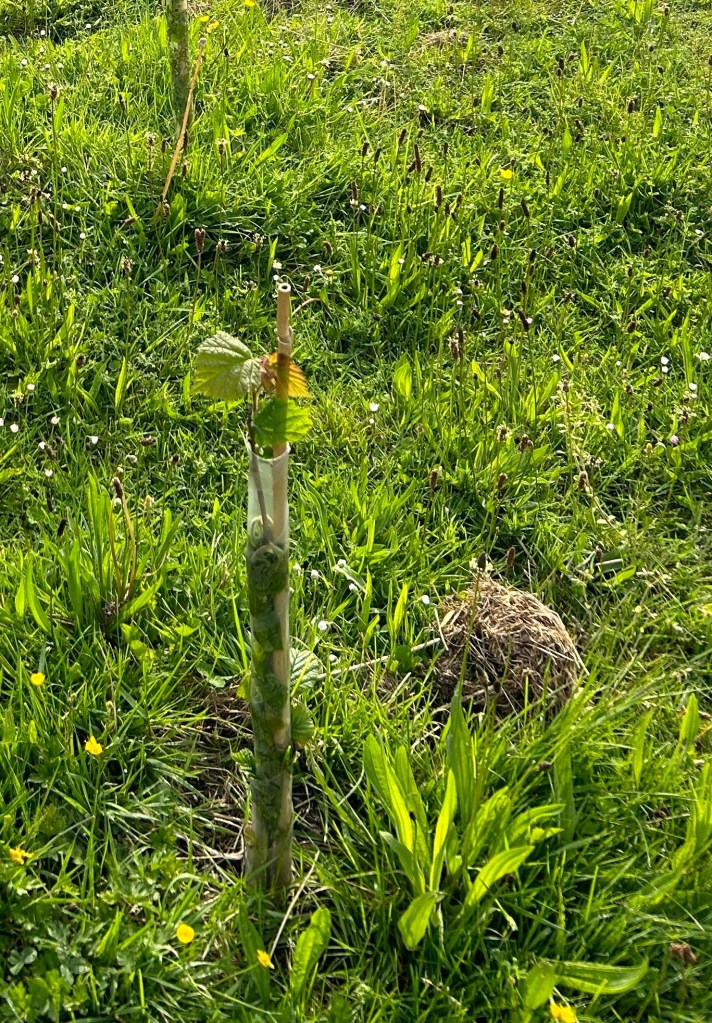
The main wildlife corridors are going to be planted with low density hedging type plants including elder, hawthorn, hazel, viburnum, dogwood, wild rose, field maple, guelder rose, cherry plum and crab apple. The 500 bareroot whips arrived in January 2024.
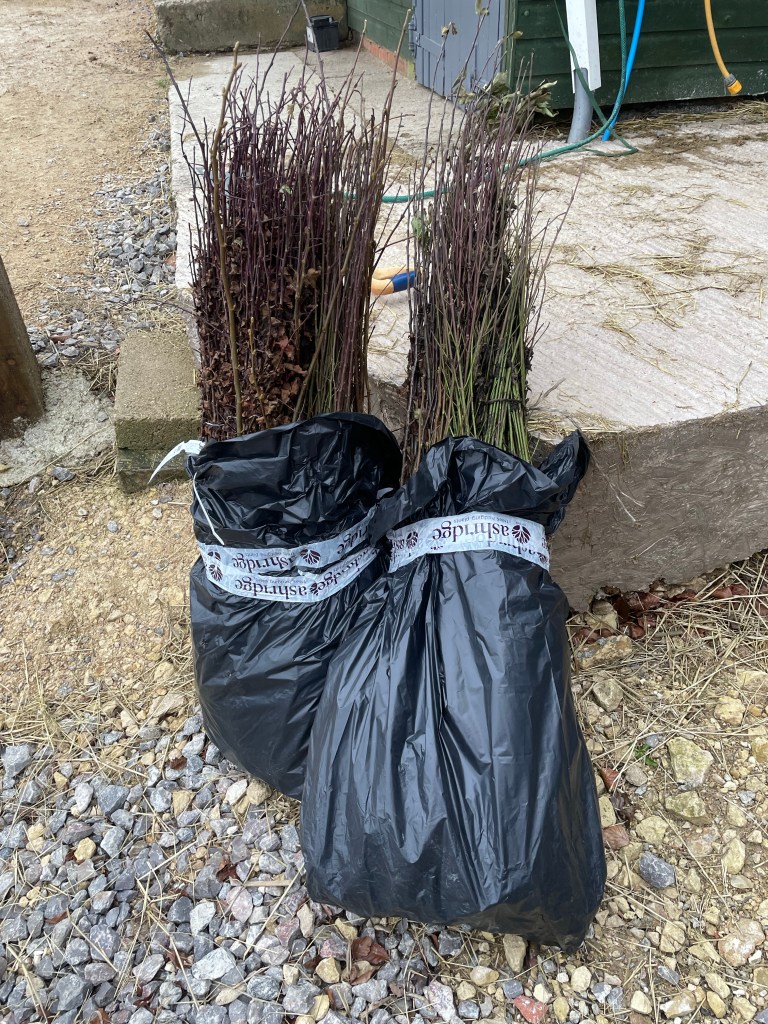
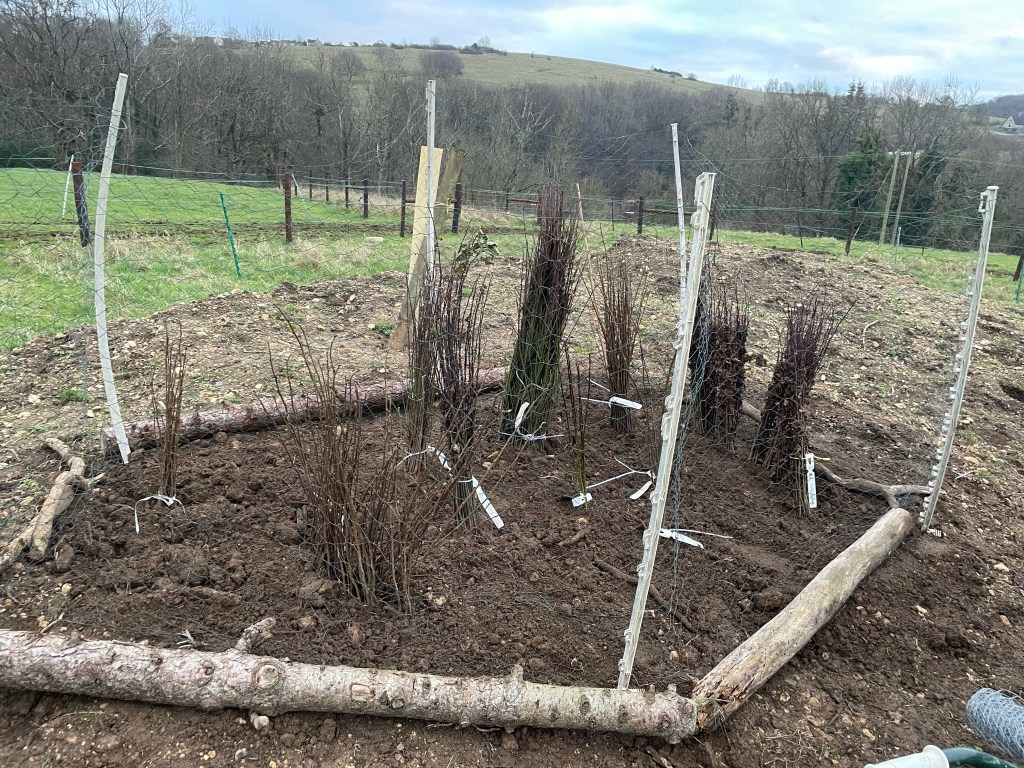
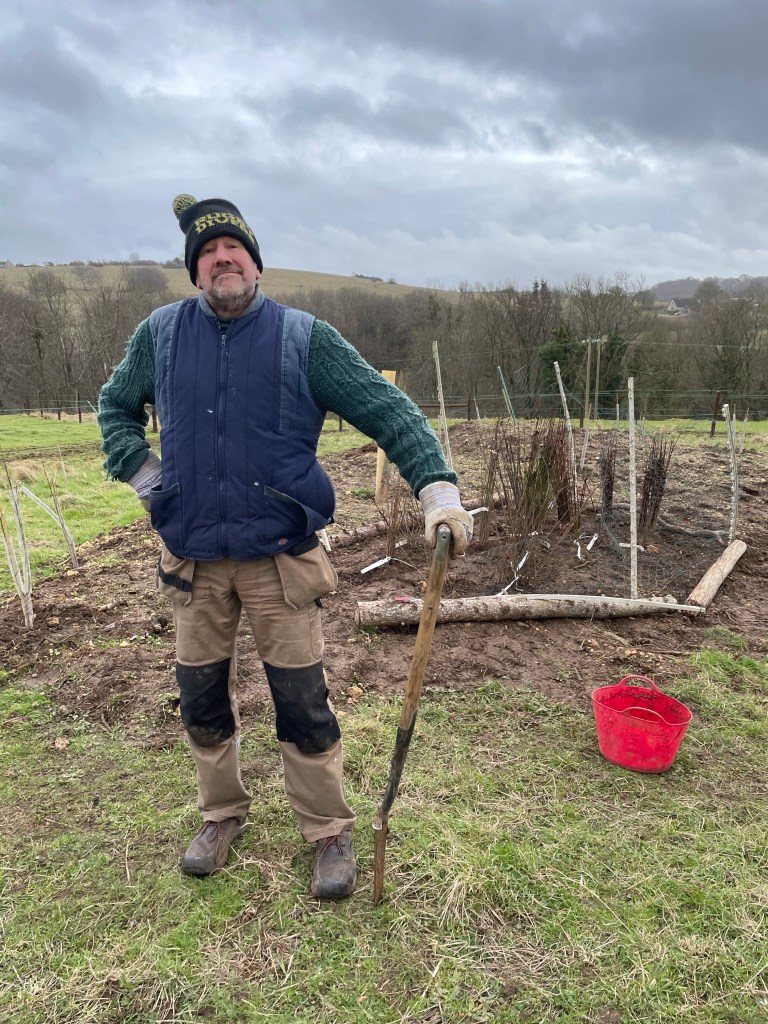
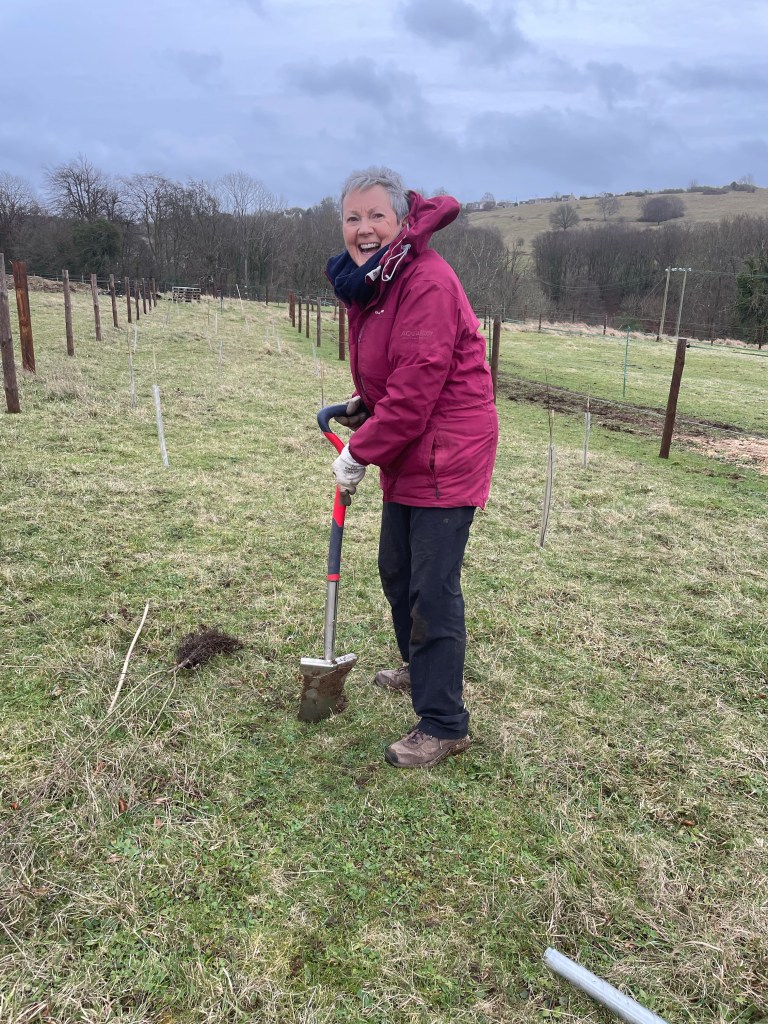
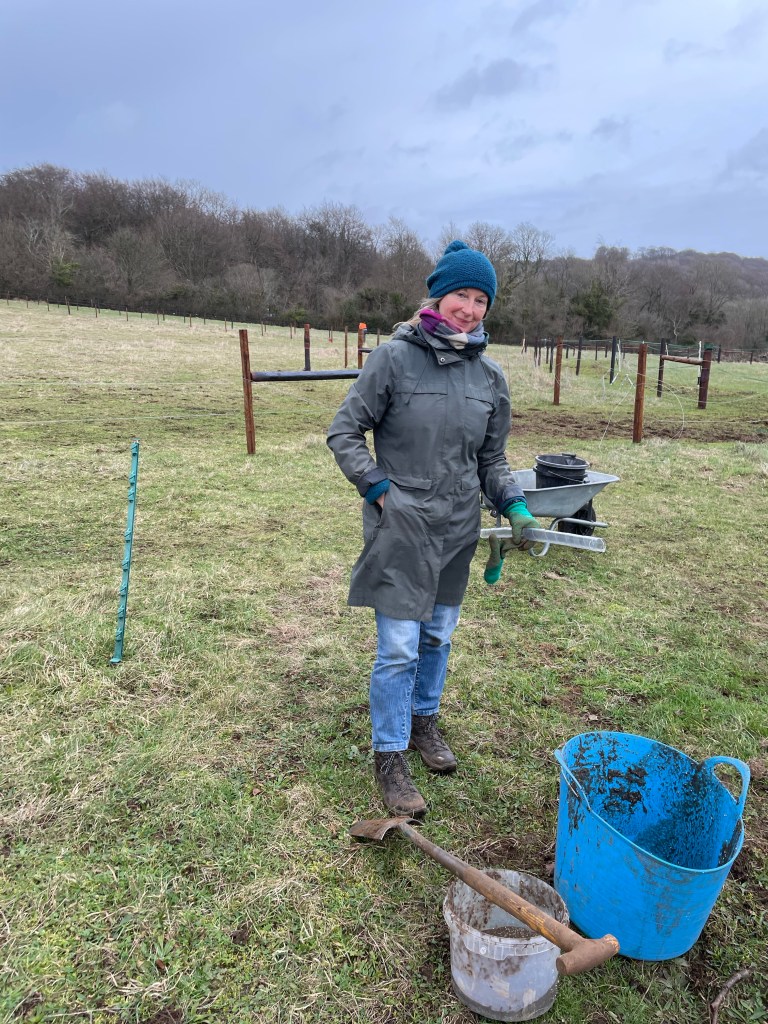
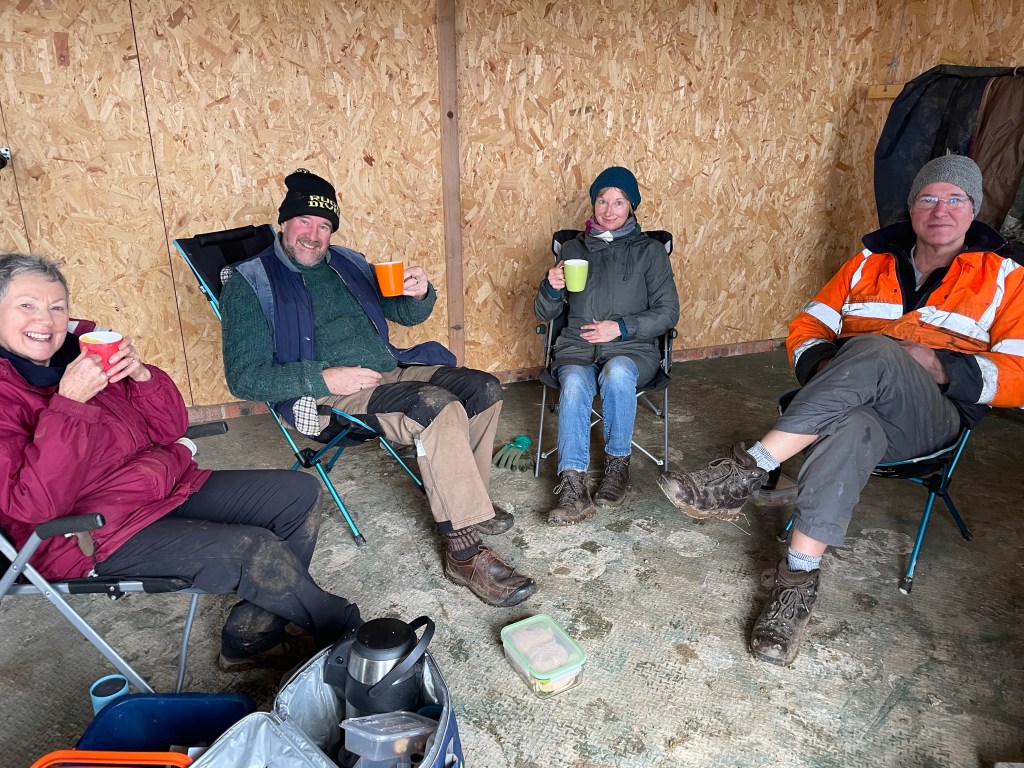
We set about planting , with a little help from our friends. Eve and Matt and Jo joined us for a day, and the following week Jan came to help. Planting into Cotswold brash is challenging. After sinking the space in about 4-5 inches you always hit stone. Some of the smaller rooted plants can be persuaded in easily, but the ones with bigger root systems took a bit more work digging a hole.
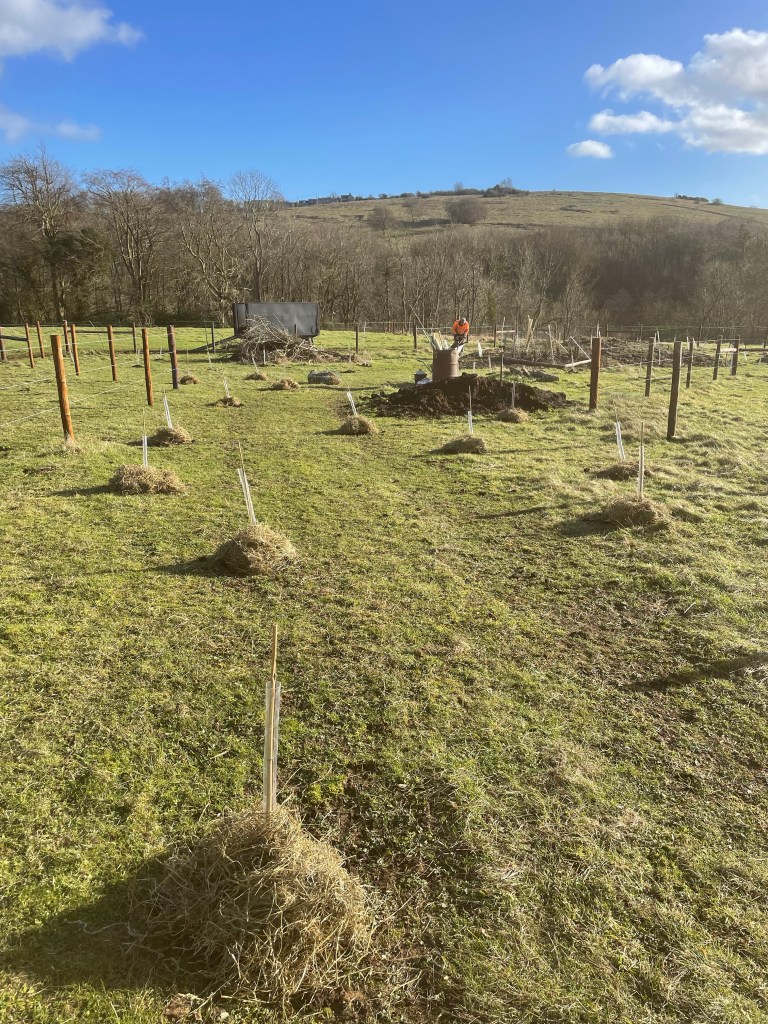
A good way to recycle yard waste
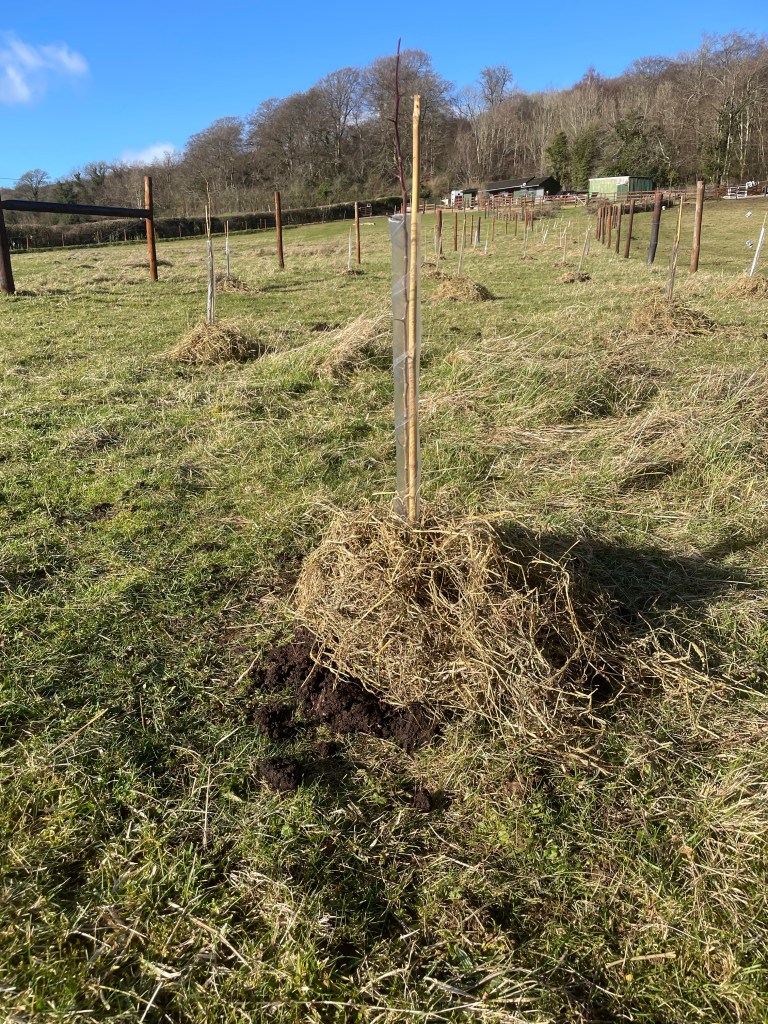
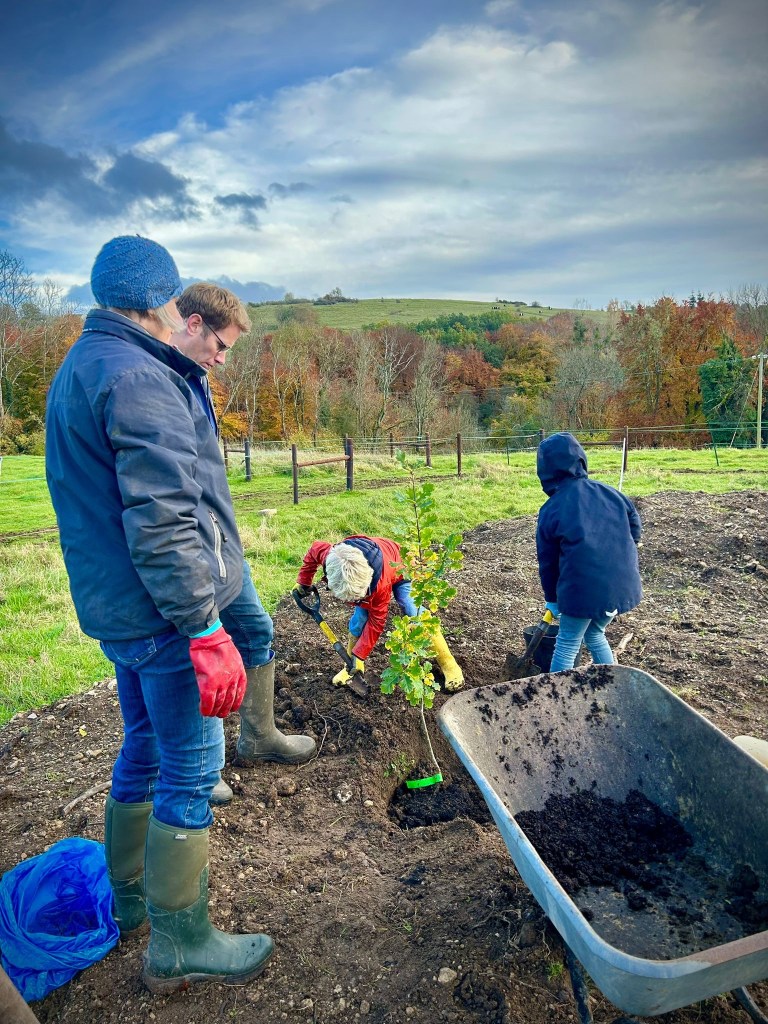
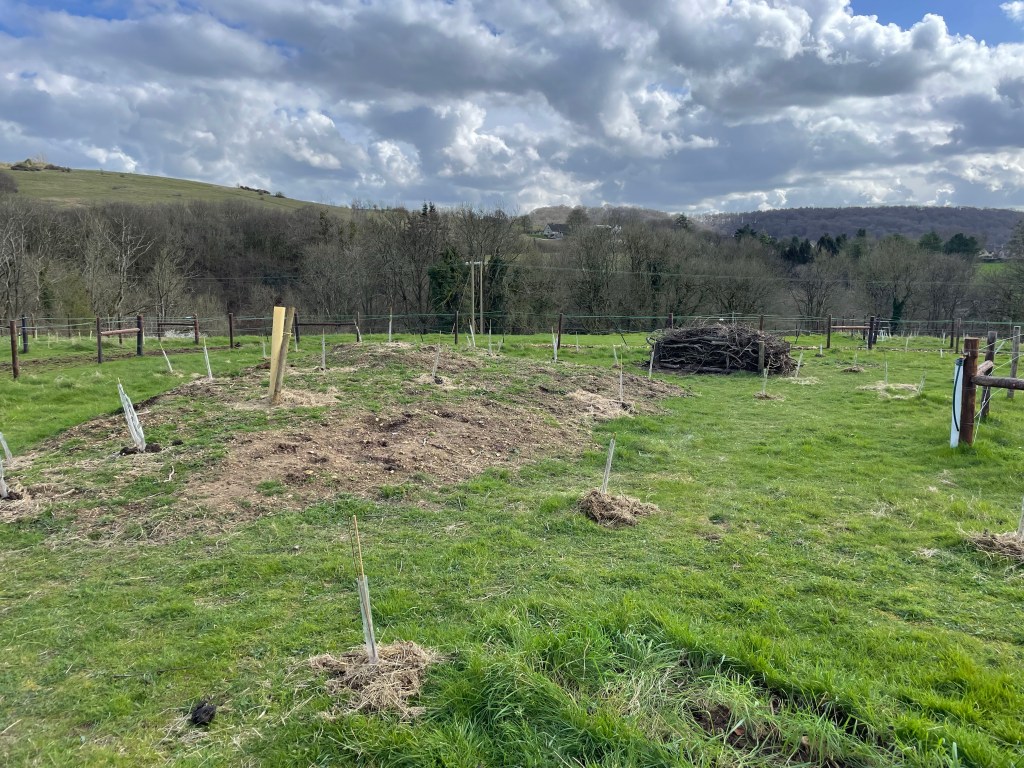
A single oak on the mound and various other trees elsewhere
Dead hedges
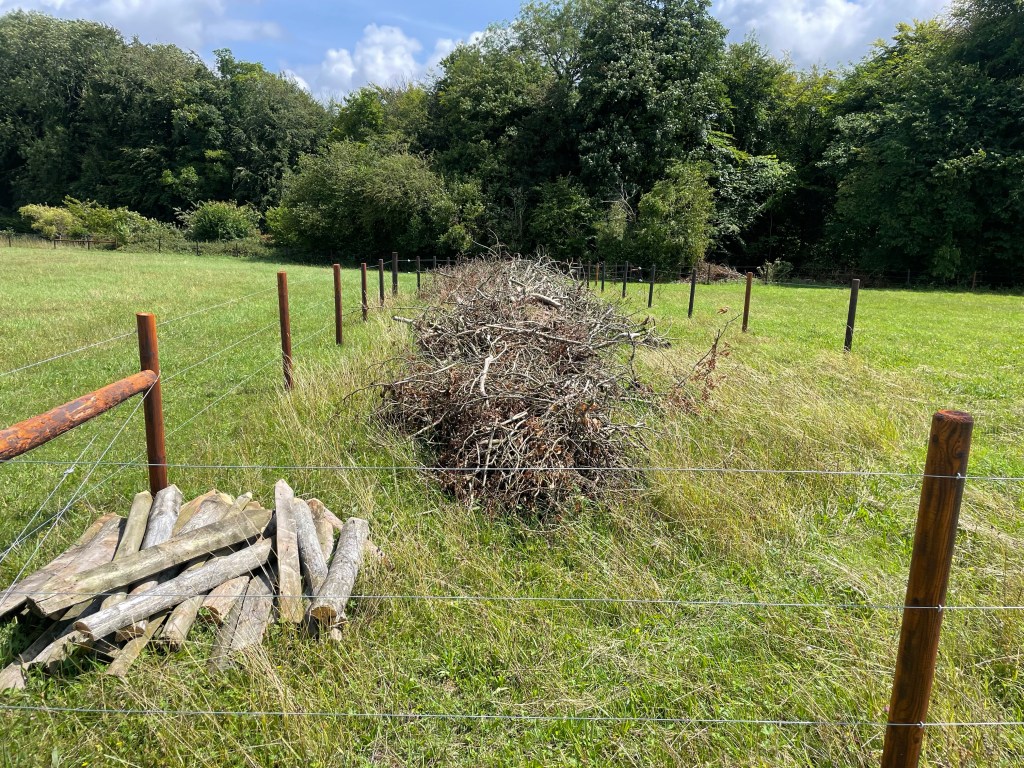
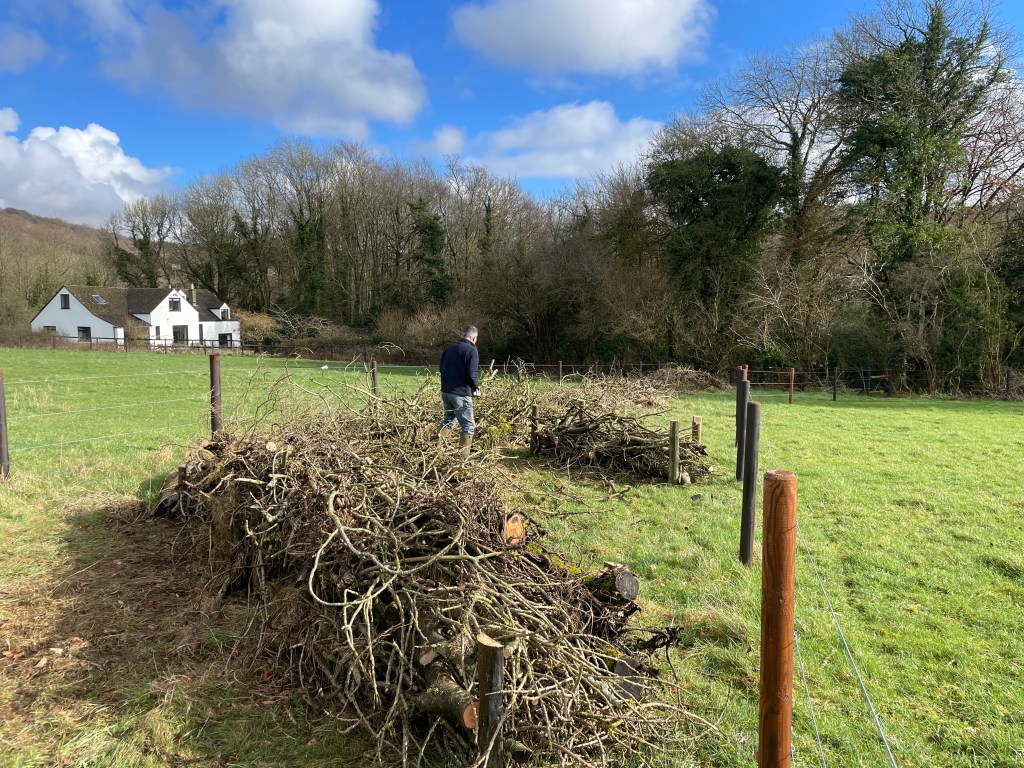
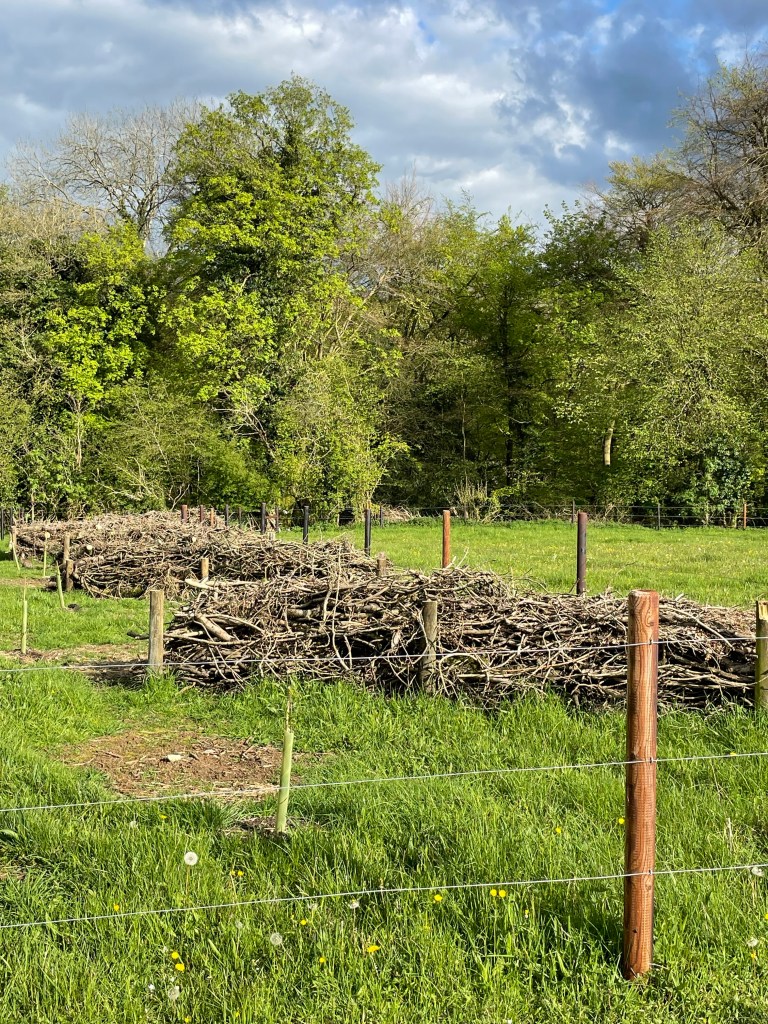
In 2023 before the perimeter fencing was begun the scouts who own the woods below our field took the access opportunity to fell some dead ash trees near our fenceline. We asked them to leave us the dead branches so that we could create dead wood habitat with them. Dead hedges are an excellent way to use old branches, and create valuable habitat for all sorts of insects, toads, small rodents and birds. Wrens and robins are always diving in and out of the dead hedges.
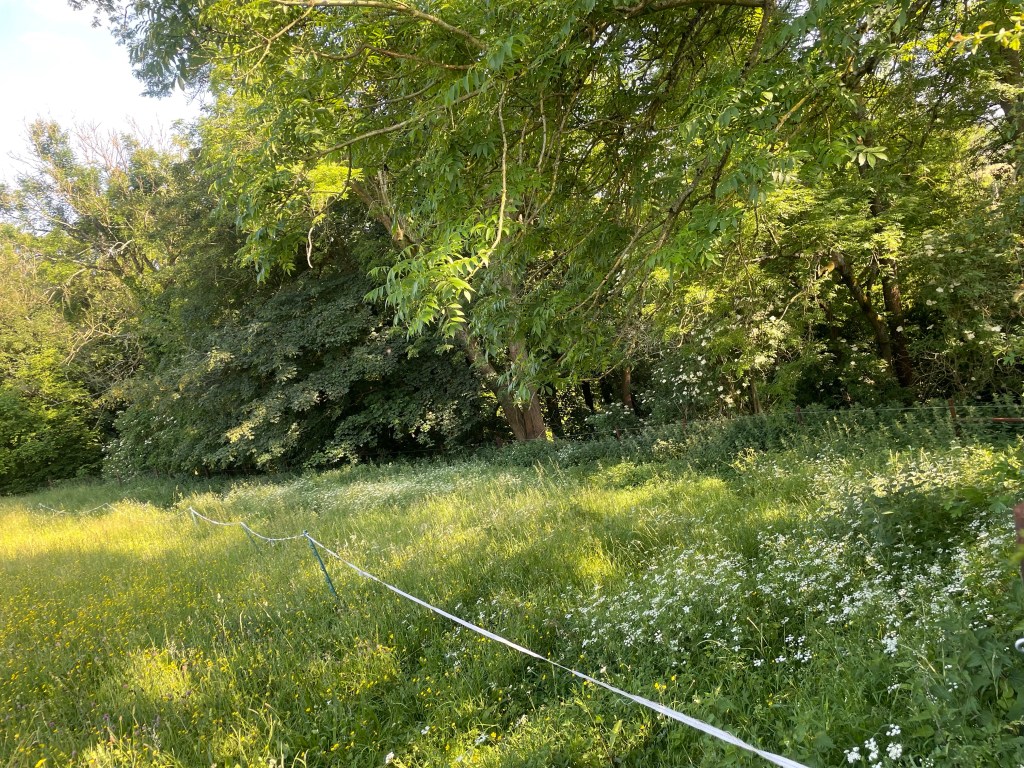
A few hedge trees will be planted just here to give it a head start
 Far Ground Story
Leave a comment